Writing the Past, or Hunting for Trouble
I know I’ve mentioned more than once on this blog that my attitude toward writing fiction differs from my approach to almost every other area of life. Something sparks an idea in my head, I identify a heroine and (possible) hero and assign them tentative goals, I research a setting, and then I start writing, checking out answers to potential questions as blanks require filling.
Often the story changes multiple times as it develops. Main characters may refuse to play the role assigned to them, attempts to answer specific questions reveal that the overall scheme requires different solutions, and chasms that appear in the plot need filling.
Nowhere has this statement applied more than it does to Catch a Falling Star, one of my two current works in progress. In part, that reflects my lack of knowledge of the setting in comparison to my main field, sixteenth-century Russia and the surrounding lands. I’ve certainly read a fair amount of Tudor history—same century, after all, and early modern Europe was my secondary field. But I also see vast gaps when it comes to specific periods of, say, Elizabeth I’s reign.
Now, as I’ve also written elsewhere, I love historical research. Why else would I have become a historian in the first place? And the closer I get to the source—people on the ground, recording elements of their daily lives—the more I feel like a detective on a hunt for answers.
But what kind of answers? That’s where history and fiction differ. When I research for a novel, I’m looking for facts I can use, of course. But even more, I’m looking for possibilities—attitudes, actions, character traits, relationships, assumptions about how the world works and what’s important—that will turn my fictional characters into people of their time.
Sometimes, most often for secondary characters, I want a sense of what passed for “normal” in that time and place. Can’t have a Tudor maid acting, still less speaking, like a twentieth-century Valley girl. But since novels thrive on drama, I’m also seeking the wild exceptions—the bandit monk who became Semyon in The Swan Princess, for example, or the Turko-Tatar epic cycle featuring warrior heroines as well as heroes that inspired Nasan throughout Legends of the Five Directions and into the follow-up series, Songs of Steppe & Forest.
With Catch a Falling Star, I started with Anthony Jenkinson (1529–1610/11), the real-life English explorer whose casual comment about his “wench Aura Soltana” inspired the novel. I read everything I could get my hands on about Aura Soltana herself—very little, and the name is so obviously not Tatar or Turkic that I revised it as Arasultan. Then I plunged into Elizabeth I’s reign, where the problem is not too few sources but far too many to master in a short period of time. Still, I soldiered on through various biographies, studies of the era, even novels once I felt comfortable that I could separate known facts from details that enriched the story but might reflect the writer’s imagination more than Elizabethan reality.
At the same time, I began writing in my usual haphazard way, reworking the first few chapters half a dozen times as I introduced new plot elements and characters that in turn required shifting of events and reimagining of relationships. After introducing a couple of incidents intended to show Arasultan’s skill with horses, I realized that for my story to develop plausibly over the minimum of six years needed for hero and heroine to connect, I needed something—more accurately, someone—to act as an opposing force.

In short, I needed a villain, meaning a specific person or two, dedicated enough to the cause to remain committed regardless of setbacks. And that in turn required that I find out what specifically might motivate a villain in 1560 and 1561, where that person might come from, and what would keep the cause alive despite setbacks.
Now, one problem with history books is that they tend to glide over specific days, months, years in search of trends and themes. Good for teaching classes—who wants to memorize the events of every month in a random year?—but not so good for a historian turned historical novelist looking for outrageous possibilities that can give rise to dramatic fiction. Still, I had already come across a curious (to me) incident in which certain Protestant Scottish lords had approached the English court with a request for Elizabeth’s help against members of their own government. So I decided to start there.
My own ancestry is Scots on both sides. I love the country with a passion and proudly consider myself a part of it, but several attempts to study its history have ended with me wanting to tear my hair out by the roots. So many warring factions, so much destructive conflict among them, so strong a tendency to favor independence over compromise—it makes for depressing reading after a while.
But it also makes for great drama, and at no time more than the sixteenth century, when Scotland had a Catholic queen and regent, Catholic clans in the Highlands, Protestant clans in the Lowlands, and John Knox doing his level best to stir up trouble wherever he saw the opportunity. If I couldn’t find dramatic potential there, I might as well hang up my authorial tam-o’-shanter and slink away from the field.

But how to determine exactly what happened when? Biographies of Mary, Queen of Scots, abound, but she spent much of her youth in France (although it turns out she is, in fact, the link). I didn’t want to sift through hundreds of pages on conditions at the French court when my focus was on Scotland, and I had trouble finding histories of Scotland specifically focused on the sixteenth century. Until, that is, I discovered Andrew Lang’s (yes, the guy who wrote the Fairy Books, although according to the Internet his wife, Nora, did much of that work) multi-volume History of Scotland, one part of which is a blow-by-blow, month-by-month account of Mary Stuart’s reign.
It’s a Victorian account, so the interpretive framework seems quite old-fashioned these days, but I don’t care, because what I need from this book is exactly what Lang offers: on March 21, 1560, S
o-and-so did this or wrote that or visited such-and-such place. On and on, from the death of James V through the 1560s and beyond. As a result, I now have identified a pair of villains and a set of motives for them both. Stay tuned for more information as the story develops, because of course, one result of the new research is that I need to overhaul those first six chapters (and even the historical note) at least once more.
And just as I say every time I publish a novel set in sixteenth-century Russia, if something in the story seems too wild for words, well, that will be the part I found in a history book …
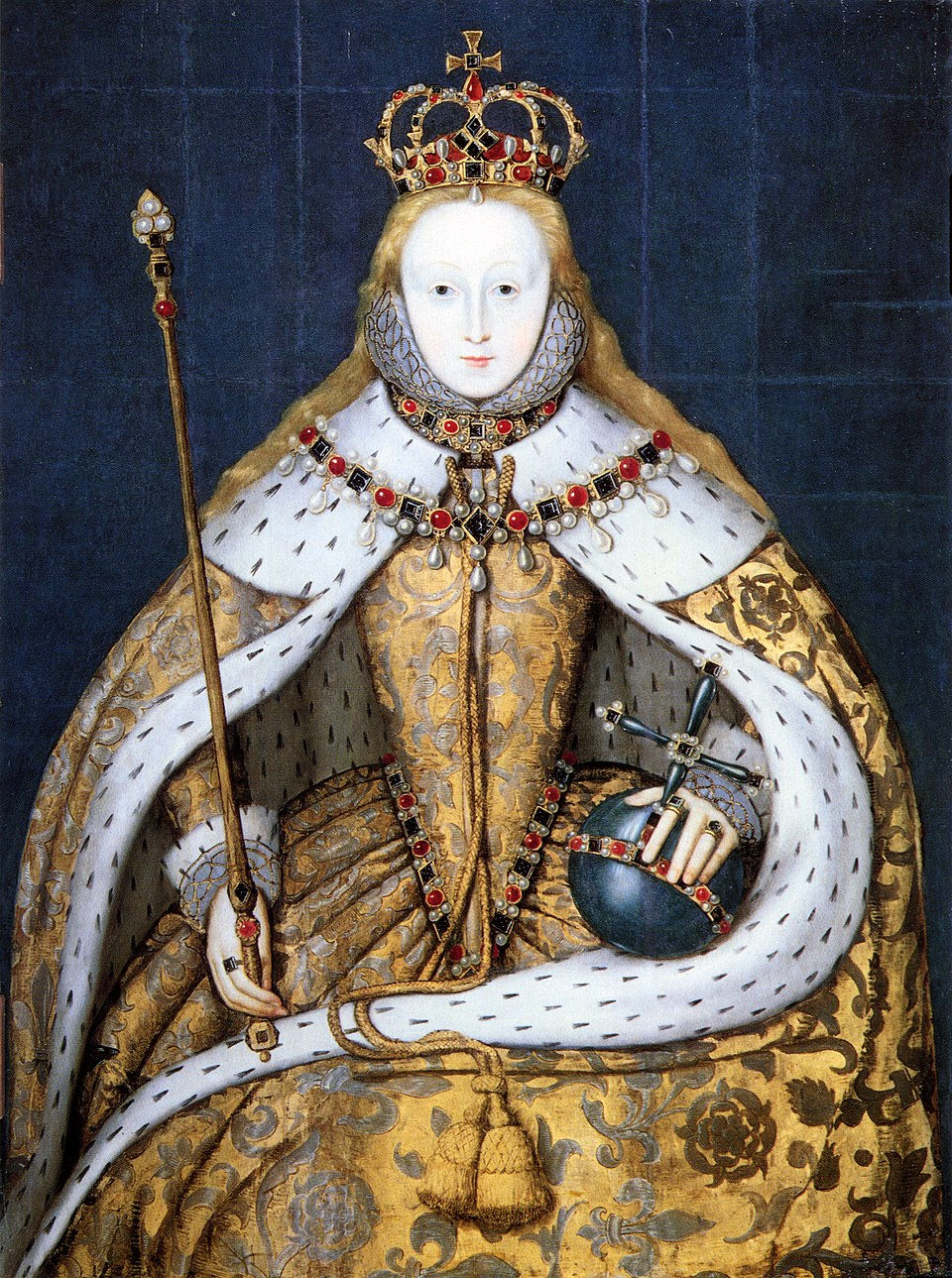
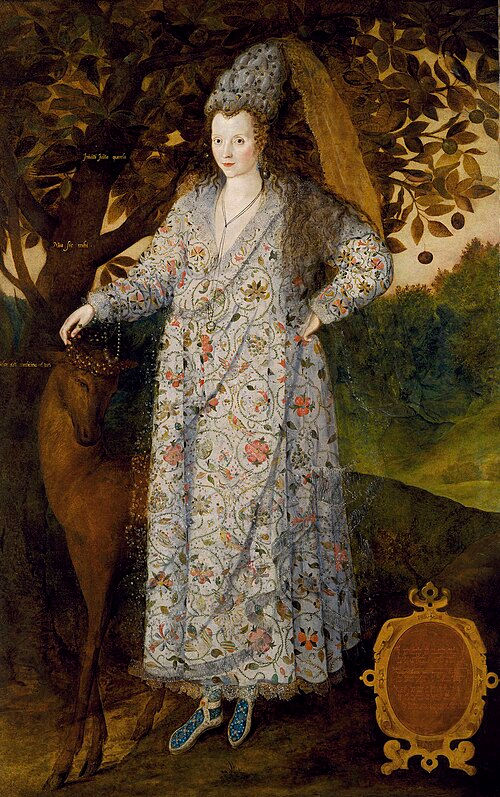
Images of Elizabeth I in the 1560s and an unknown potential villain public domain via Wikimedia Commons.